Thursday, March 29, 2012

APOD 4.1

See Explanation.  Clicking on the picture will download 
the highest resolution version available.

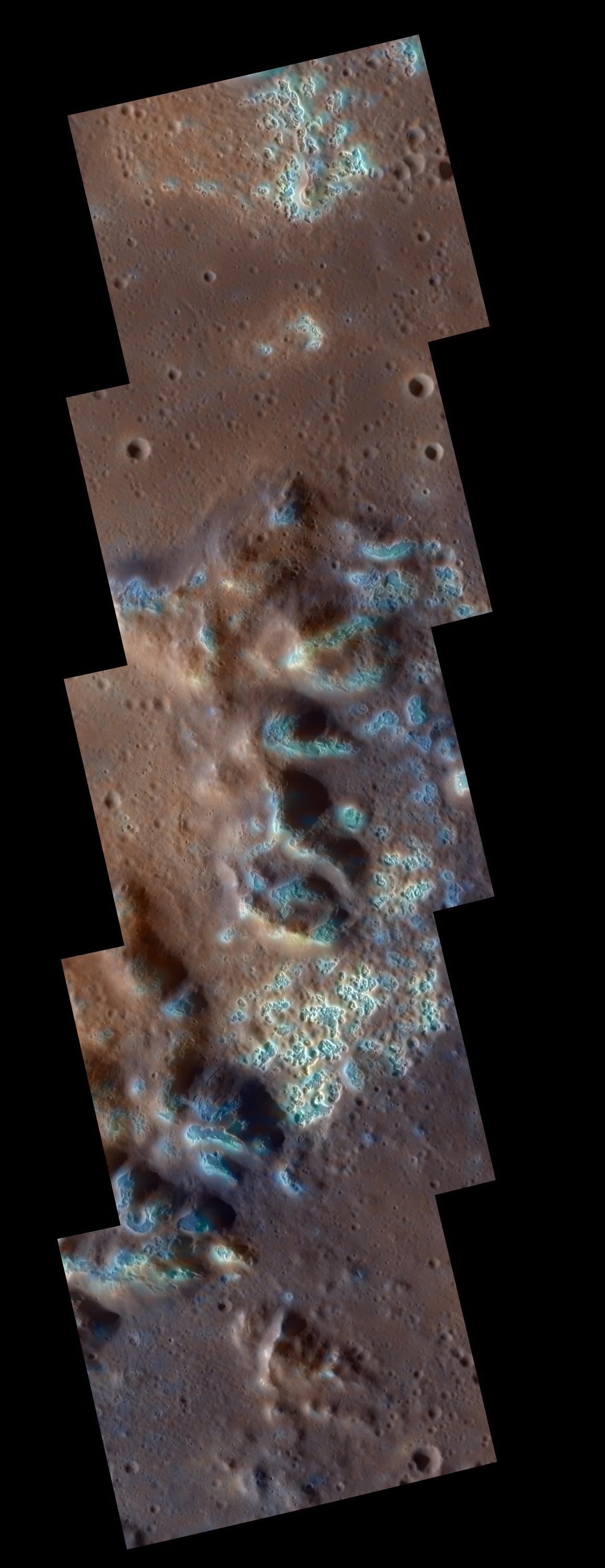
This is an uimage taken of Mercury, focusin on these odd blue features called hollows. They were taken by the space craft MESSENGER, which is orbiting Mercury currently. Scientists are not quite sure how they formed because they do not look like impact craters we see on the moon, or other planets. This picture was taken of the Raditladi impact basin, 40 km wide. one hypothesis is that they formed from sublimation of  material exposed and heated when the violent impact occured that created the basin. The MESSENGER is the first spacecraft to orbit Mercury. It is scheduled to orbit into 2013.

Wednesday, March 28, 2012

Observation

March 27th around 8:20-9:20 in Lakewood Ranch. The light pollution was pretty bad but the moon, Venus, and Jupiter were spectacular. I couldn't see them well the last few nights because my house is surrounded by tall trees, as is the rest of my nieghborhood so on my way home from a game I was finally able to see their close alignment clearly. The moon was just a sliver, wanning into a new moon. Orion was easy to spot and I think Ursa Major or Canes Major. i explained to my parents all the constellations around orion that they couldnt see and how the Unicorn as the beautiful Rossett Nebula in it. I explained how we had learned about the different kinds of deaths of stars. My dad really liked the black hole stuff. Our car ride lasted about an hour as did the discussion on astronomy, once my dad gets going, he keeps on talking.

Oberservation

March 10th at siesta Key beach around 8:30  I was with some friends. It was a relatively clear night excpet some thin clouds near the horizon. Just barely over the top of some buildings we saw a huge orange moon starting to rise. It was just past a full moon so it was wanning. It was a weird oval shape and being near the horizon seemed to stretch it even further, making it seem like an egg. As we sat and watched the moon rise i pointed out orion, where other constellations would be, if the light pollution wasn't so bad, like the dove, and tarus, I think I found Ursa Major.I pointed out venus and jupiter as well. As the moon got up a little further it was intercepted by a thin cloud. The cloud was only a small line blocking the light of part on the moon. As it got to the middle it looked like a hamburger. After awhile the moon was white, getting high enough to get away from the horizon distortion. which I also attempted to explain to my friends. In total we stayed out there for three hours.

Wednesday, March 21, 2012

Supernovas


This is a picture of the crab nebula it is a pulsar. On July 4, 1054 A.D. It is believed that when it exploded it was as bright as the moon, so it was visible in the daytime sky. It is about 1800 pc away.

This is the remnant of the super nova Tycho. It was produced by the explosion of a white dawf star in our galaxy. The picture was taken in x-rays. Tycho Brahe discovered the supernova in 1572. It is located in the milky way about 13,000 light years from Earth. It is also thought it could have been seen in the daylight.
Cassiopeia A
This is Cassiopeia A, taken by Chandra in x-ray. It is a 300 year old Supernova remnant. It is 11,000 lightyears away. It is the youngest known supernova remnant in our galaxy. It is believed it exploded around 1667. It was not recognized until 1980 by the astronomer William Ashworth. It is believed it wasn't an extremely bright explosion, it stayed near the brighness of a normal star.

Friday, March 9, 2012

APOD 3.8

See Explanation.  Clicking on the picture will download
 the highest resolution version available.
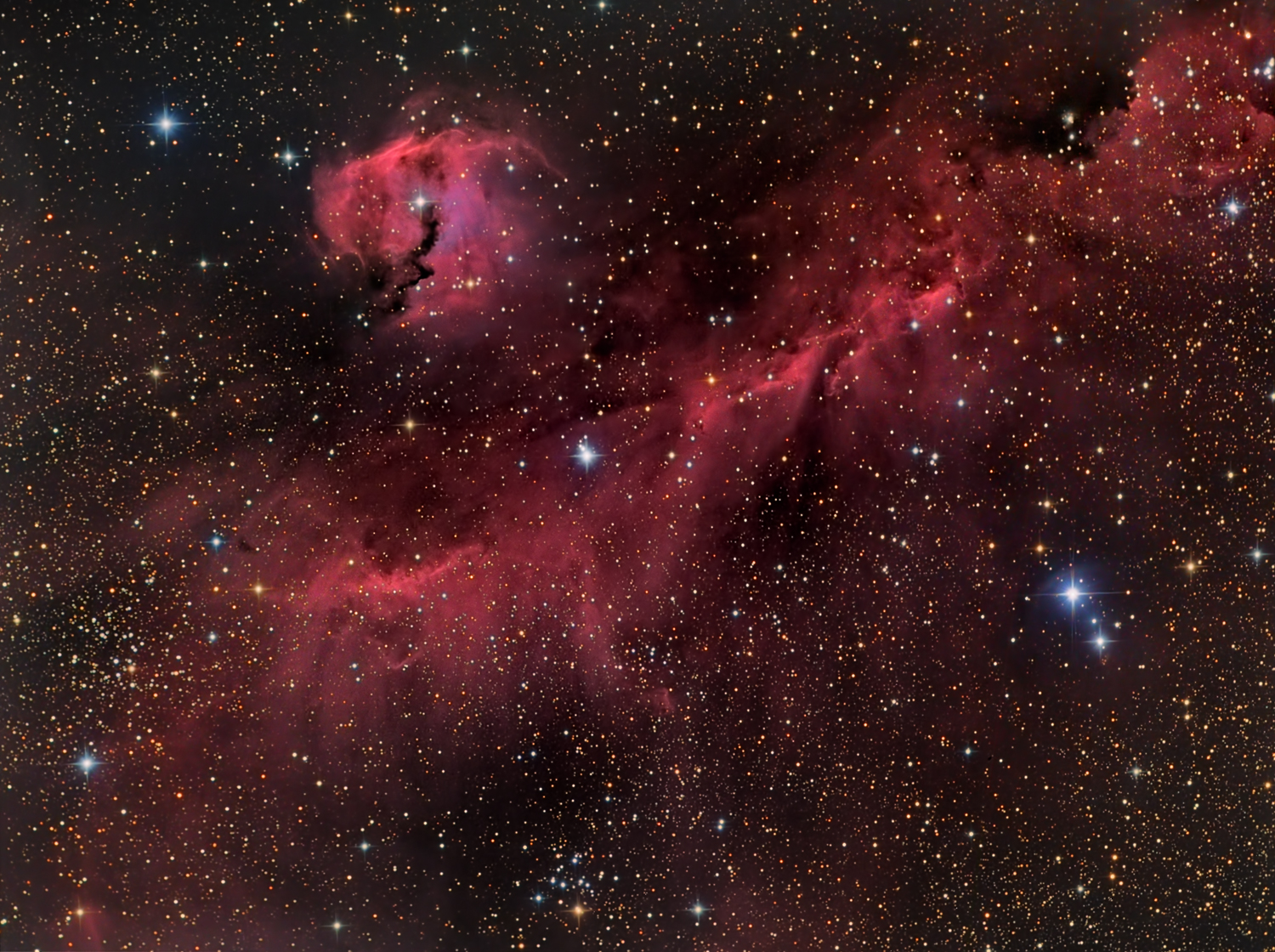
This is the Sea Gull nebula located near the constellation Monocerous. It is located near the star Sirius from Canis Major. A massive star is farming its head at the top of the nebula. The nebula has a reddish glow from the amount of hydrogen within it. THe nebula spreads over 100 light years at an estimated 3,800 light-year distance. After learning about nebulas and star formation I have much more appreciation for nebulas.

Sunday, March 4, 2012

Apod 3.7

http://apod.nasa.gov/apod/image/1203/eso510_hst_1435.jpg

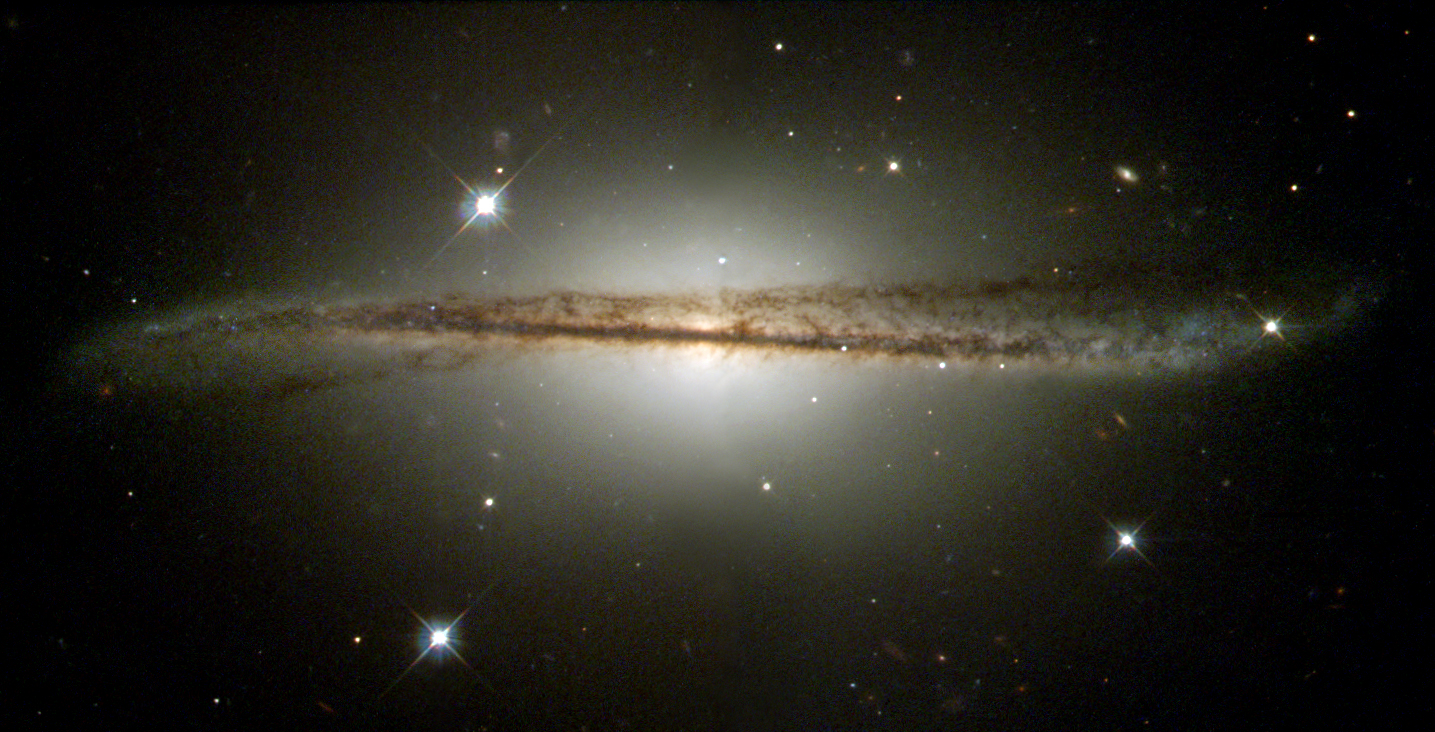
Most galaxies are flat and thin. However some are warped. The actual cause of the warping is not currently known. Astronomers believe that our own galaxy is slightly warped as well. ESO 510-13 is captured in this picture some 150 million lightyears away. It is 100,000 lightyears away. It is cool to see how much is going on in our universe that we don't know about. There is still a lot to discover which is really exciting. It will be interesting to see what we find this decade.

Friday, March 2, 2012

Jacobus Kapteyn

Emily Gaubatz
Mr. Percival
Astronomy
1 March 2012
Jacobus Kapteyn
Jacobus Kapteyn was born on January 19, 1851 in Barneveld, Gelderland. He is a dutch astronomer. He studied at the University of Utrecht to study mathematics and physics. After finishing college he worked at the Leiden Observatory for three years, then became the first professor of astronomy and theoretical mechanics at the University of Groningen. For awhile he didn’t have access to an observatory so he measured photographic plates for David Gill which resulted in the publication of Cape Photographic Durchmusterunq, which was a catalog listing positions and magnitudes of 454,875 stars in the Southern Hemisphere. He discovered Kapteyn’s star, it had the highest proper motion until Bernard’s star.
Kapteyn studied the proper motion of stars. His data had been the first example of galactic rotation. He used night photography and trigonometric parallax to measure the proper motion of stars. THrought this method he discovered two streams of stars moving in opposite directions, which we now recognize as the spiral of the Milky Way rotating. He organized a world wide effort to find out the structure and shape of the galaxy through his Plan of Selected Areas. By collecting data from different areas in the world he would be better able to figure out the galaxy’s structure. He had people record stars apparent magnitude and spectral type, trying to understand the size of the galaxy. He also had them record radial velocity and proper motion of the stars. There were a total of 206 zones were research was being recorded by 40 different observatories.
            In 1913 he was awarded the James Craig Watson Medal. He retired in 1921 from the university at the age of seventy. At the request of one of his former students he went back to Leiden to assist in upgrading the observatory to contemporary astronomical standards. His life work the First attempt at a theory of the arrangement and motion of the sidereal system was published in 1922, it described a lens-shaped island universe which the density decreased away from the center, now known as the Kapteyn’s Universe model. He believed the universe to be 40,00 light years in size and the sun being 2,000 light years from its center. It is now thought that it is 100,000 light years in distance and the sun is 30,000 light years from the center.
After his death a telescope was named after him , becoming the Jacobus Kapteyn Telescope by the Isaac Newton Group of Telescopes.