Orange Sun Oozing:
This video clip was taken over an hour showing how rapidly the sun's surface changes. The clip was directed over a sun spot, dramatizing the rapid motion. At first the video seems natural and relatable because it looks like a lava flow that would occur on Earth. There is a definate churning of molten liquid occuring. The amazing part is that the retively small sized dots, a granule, that rapidly shape shift or dissapere are the size of Earth's continents. That is hard to wrap around in my mind, that something that big can be completely molded in an hour. It is really cool to actually see the sun up that close and see it in motion rather than just a still frame.
Friday, November 11, 2011

Friday, November 4, 2011
Jupiter Near Opposition
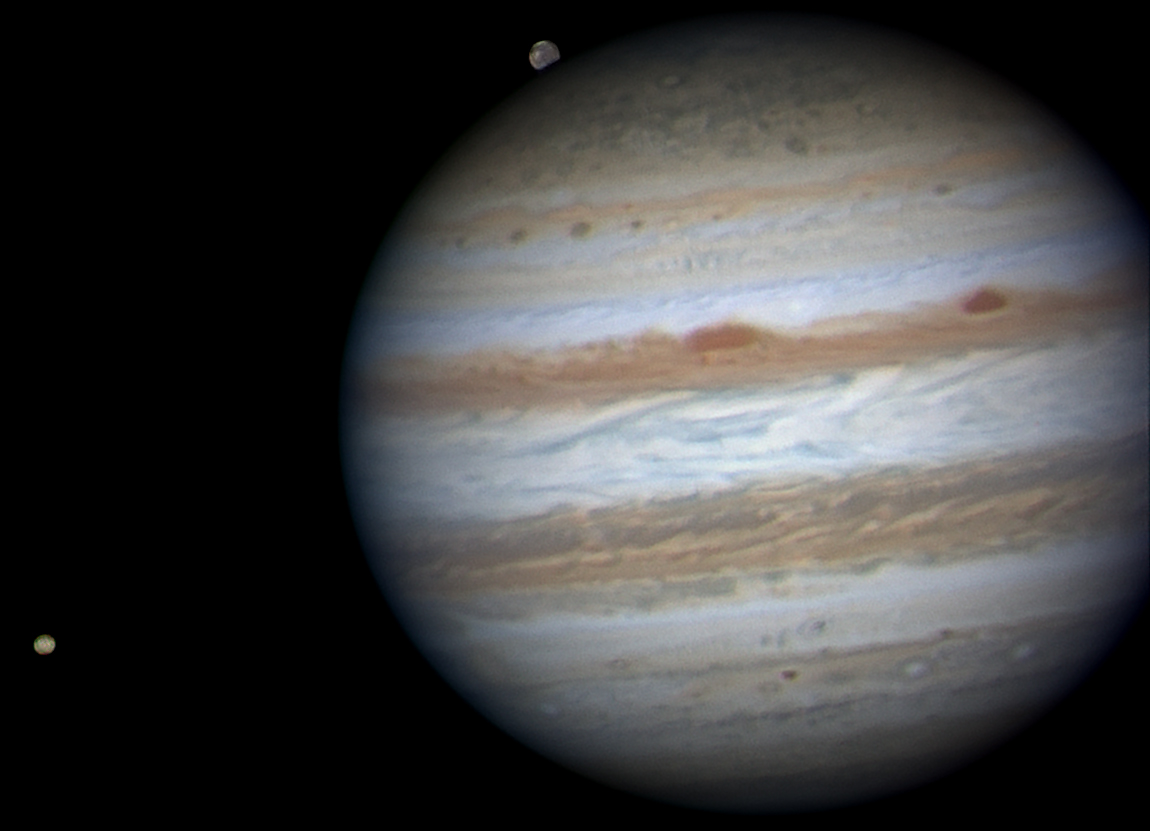
Jupiter is near opposition, which is when it is opposite of the sun. It is also closest to Earth at this time of the year, allowing this stunning shot using a 1 meter telescope. Jupiter has a stormy cloud like atmosphere creating strips of different collored swirling clouds. The two dots one above and one to the left are two of Jupiter's biggest moons. Io is the one to the left and is extremely volcanic and has many sulfuric geysers. The other moon is Ganymede, known for its icy surface. It also has a atmoshere simulare to Earths. Scientists believe that under the ice is an huge body of water. These are two of the four moons Galileo saw in his observations. This picture interested me because my research project is on Jupiter's moons so it cool to see more pictures of Jupiter and its moons now that I know more about them.
Monday, October 24, 2011
Podcast: Galileo Spaceship
The Galileo mission was a plan to have a spacecraft go to Jupiter and actually stay and study the planet, rather than just a fly by. The plan was concieved in the early 1970's. It finally launched in 1989, they used gravitational boost methods to get it to Jupiter. It had many challanges getting it to Jupiter. They even had to change how it transmitted information because its original transmitter broke. They had to wait over a decade before it got to Jupiter 1991 it filmed a astroid and the astroid Ida and it's moon. The scacecraft allowed many scientific discoveries.
Sunday, October 23, 2011
hour of observation 10/22
I was sitting in my back yard looking mainly south and west and north. I had visibility of third magnitude star almost fourth. I was trying to see the meteor shower but I dont think I saw any. The stars were flickering a lot, they seemed more so than normal, is that because the atmosphere? I was trying to find the Northern cross and work from there. I beleive I found it,, I found the summer triangle. I think I saw Scorpius or the Serpent. The moon was a wanning cresent. It was a pretty small sliver. I was observing the sky from 8 to 9. There were only a few low clouds were I was I live in Sarasota. My neighbors had some lights on and I live off Bee Ridge so that couldnt have helped the visibility. I think I successfully pointed out a few contillations to my mom however.
Friday, October 21, 2011
Galaxy on Edge
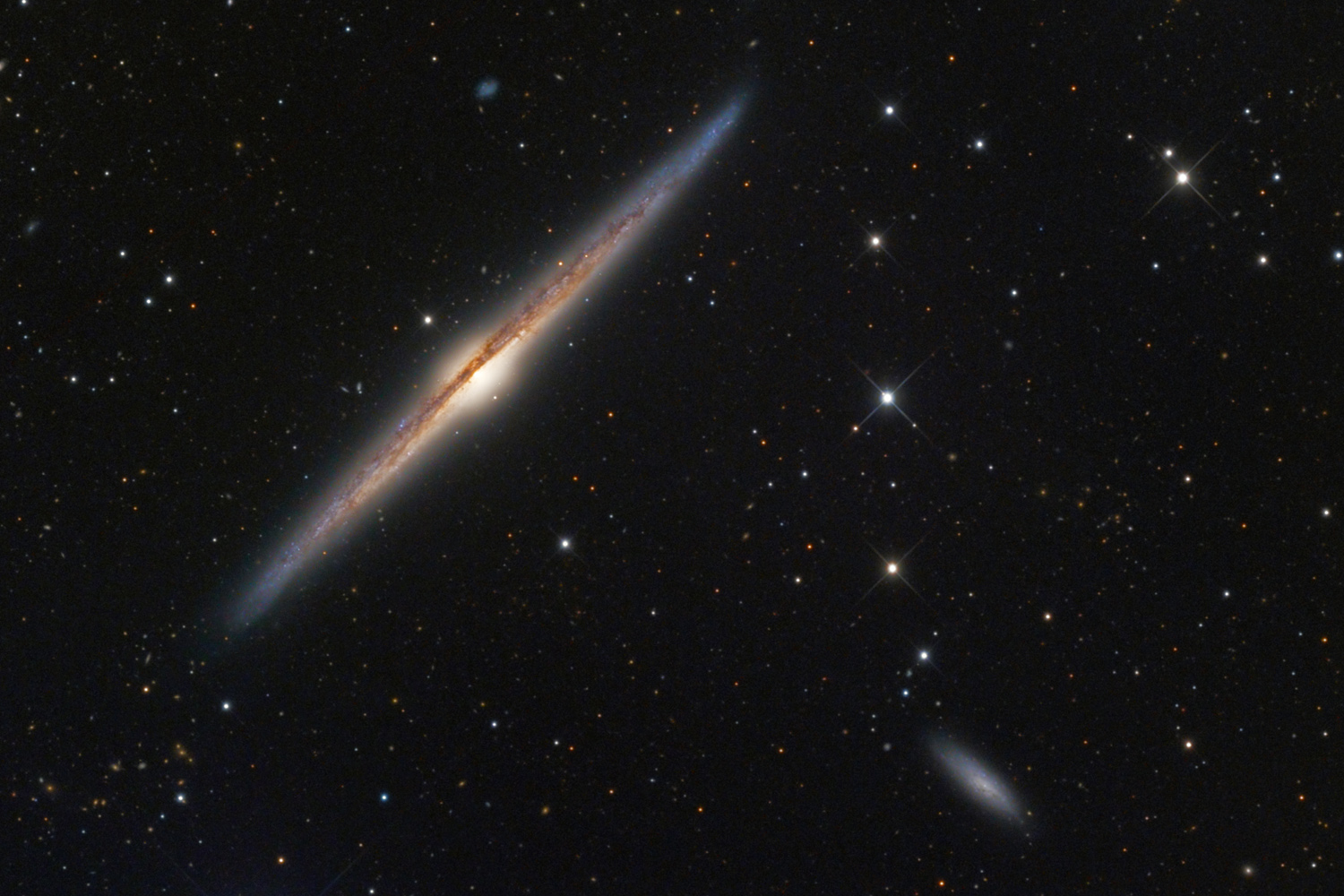
This is the Needle Galaxy, known for its thin shape. It can be found in the constellation Coma Berenices. It has an amazing size of 40 million lightyears and spans 100,000 lightyears. It is amazing haow much technology is advanced letting us view so far into space. One day maybe we will be able to view planets from other galaxies. This picture is truely amazing. It is so cool to be able to see so far past our own galaxy.
APOD 1.8
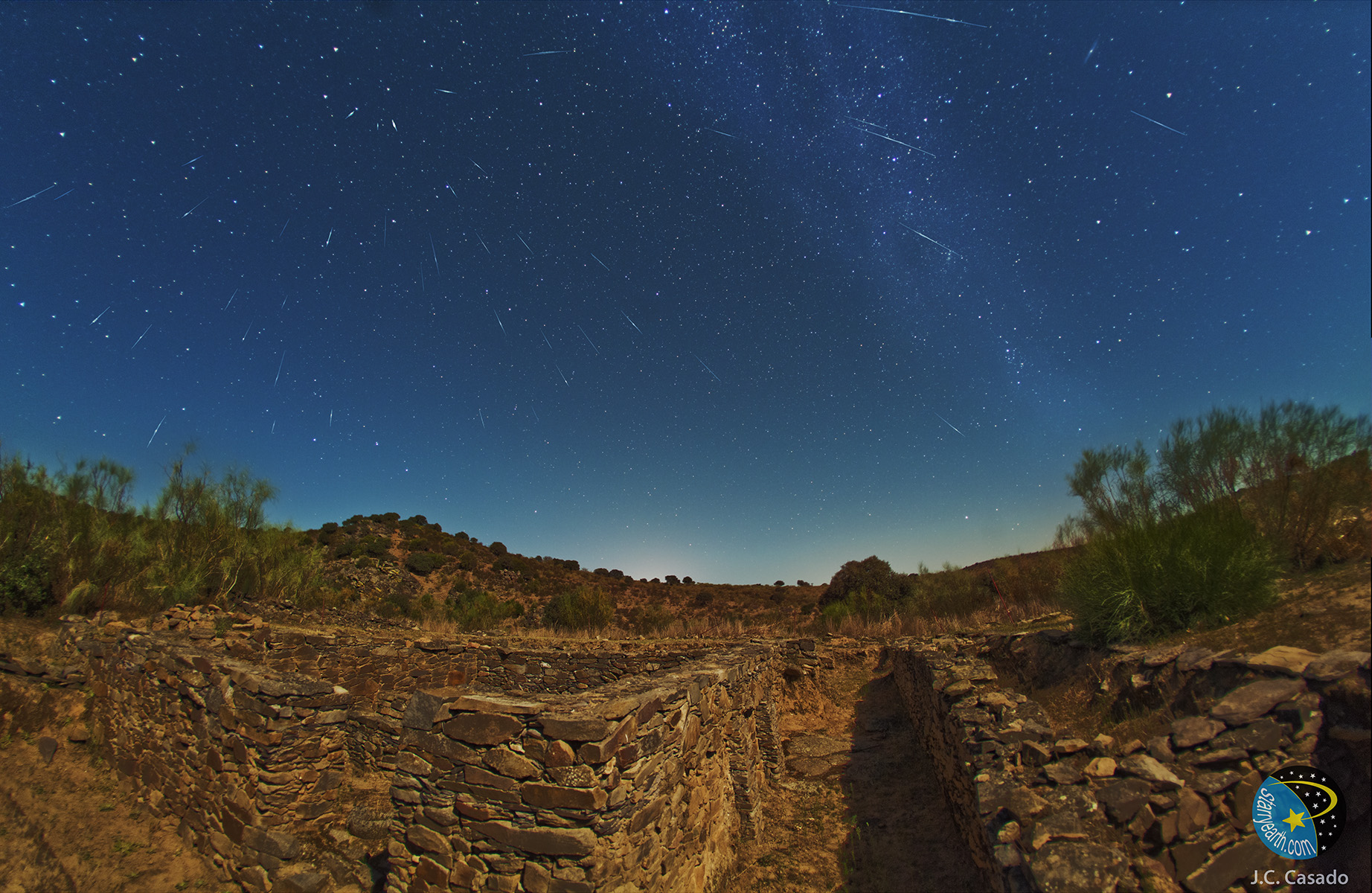
I remember geting woken up by my mom at two in the morning when i was in my early elementry years. She told me to put on a jacket and come outside quickly. My sister and I raced outside to see my dad sitting in a chair looking up. My mom called us over pointing up, she informed us there was a meteor shower. For the next hour we layed staring at the sky watching bright long streeks paint the sky, much like this picture taken in Spain of the Draconid. Tonight there is supposed to be another meteor shower so this picture really stood out to me. It is also interesting to see the costellations labeled since we have been studying them. These meteors were part of 21p/Giacobini-Zinner. Draco is thought to be the radiant of the meteors igniting them causing such a glorious display. This meteor shower happens every year.
Friday, October 14, 2011
APOD 1.7 A Strange Sunrise Over Argentina
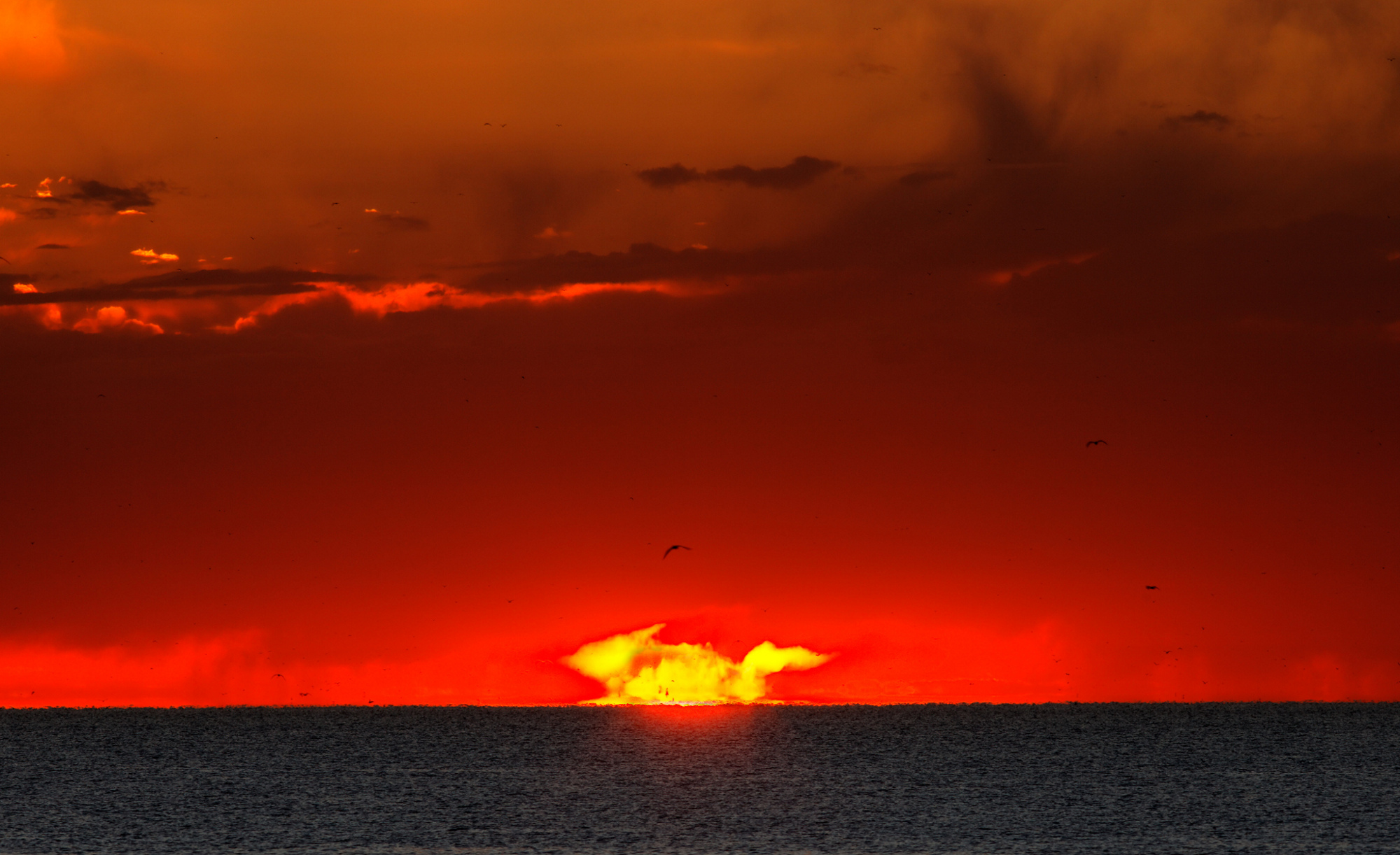
This picture was taken in Buenos Aires Argentina over the river Rio de La Plata. The deformed looking sun is thought to be a result of the deflection of light in the particles of low clouds. If the clouds were thick and low they would scatter the light creating this destorted look, covering the actual sun. The shine on the water creates a Etruscan Vase or Fata Morgana making it look like it is melted. The bright colors are marvelous and contrasted. I love taking pictures and in Florida we have wonderful sunsets, it is cool to see the glory of a sunrise in another place in the world rather than a sunset. After learning about electromagnetic waves it is interesting to apply it to a sunrise and sunset.
APOD 1.7 A Strange Sunrise Over Argentina
Thursday, October 13, 2011
Pierre Gassendi Biography
Emily Gaubatz
Mr. Percival
Astronomy
14 October 2011
Pierre Gassendi
Pierre Gassendi is a French philosopher, mathematician, writer and astronomer. He was born in 1592 in Camptercier, the Provencal area of France. He studied arithmetic, Latin, philosophy and theology. He later taught philosophy, lecturing in contradiction to the Aristotelian doctrines which contradicting the thoughts of most of 17th century society. In 1625 Gassendi was forced to leave his teaching job and moved to Paris where he met Pére Marin Mersenne, peaking his interest in Astronomy.
Although Pierre is most renowned for writing his books in philosophy and political issues, he also made a few large contributions to astronomy. He was the first to observe the transit of Mercury and then Venus using Kepler’s predictions. He also named the northern lights, Aurora Borealis. Another major contribution was the publication of his biographies of Copernicus and Tycho Brahe. Copernicus and Brahe are two of the top astronomers during Pierre’s time, by doing biographies of them both he helped keep their findings solidified in history. A crater on the moon was also names Gassendi. The crater was one of two potential landing spots for Apollo 17.
In 1625 Gassendi met his teacher Pére Marin Mersenne who had introduced him to astronomy. He had made connections to Galileo and Elie Diodati at that time which really stimulated his interest in observational astronomy. This was also the back bone to his philosophical skeptism. Had Mersenne not died so soon in 1637 then perhaps Gassendi would have followed astronomy further.
In the 1640’s Gassendi wrote a series of writing retorting the views of Descartes creating a publishing duel between the two philosophers. He also debated with Jean-Baptiste Morin, who thought that the Earth was the center of the universe. This spurred Gassendi into further examination of Galileo and Copernicus’s work. He then published Insitutio Astronomica in 1647. After this publication Gassendi fell to bad health. For the next few years he mostly spent producing philosophical publications including, Animadversiones in Decimum Librum Diogenes Laertii, one of his most extensive publications. It was in 1653 that Gassendi wrote several biographies of astronomers, including the ones about Tycho Brahe and Copernicus.
Throughout Gassendi’s life he faced many spurts of sickness which gave him the time to publish so many pieces. Gassendi made many contributions in philosophy and astronomy. On October 24, 1655 Gassendi died in Paris.
Friday, October 7, 2011
Night time Observation 9/30/11
I observed the night sky at the beach starting around 9 until 10:30. THe moon was currently a waxing cresent just coming out of a new moon. The moon was extremely thin and had an orange haze as it began to set. The moon starting at a 50 degree angle set by 9:20. THe view of the moon setting into the water was spectacular. there were few clouds. It was hard to view to the south or east due to the lights from condos or the city. I spotted Hercules and the summer triangle and the Scorpion. I tried to find the Archer and the Eagle but I had no luck. The visibility of the stars was pretty good, It was really fun to be able to point at things and know what it could posssibly be or why some stars look more blue or red.
APOD 1.6 Comet Hartley 2
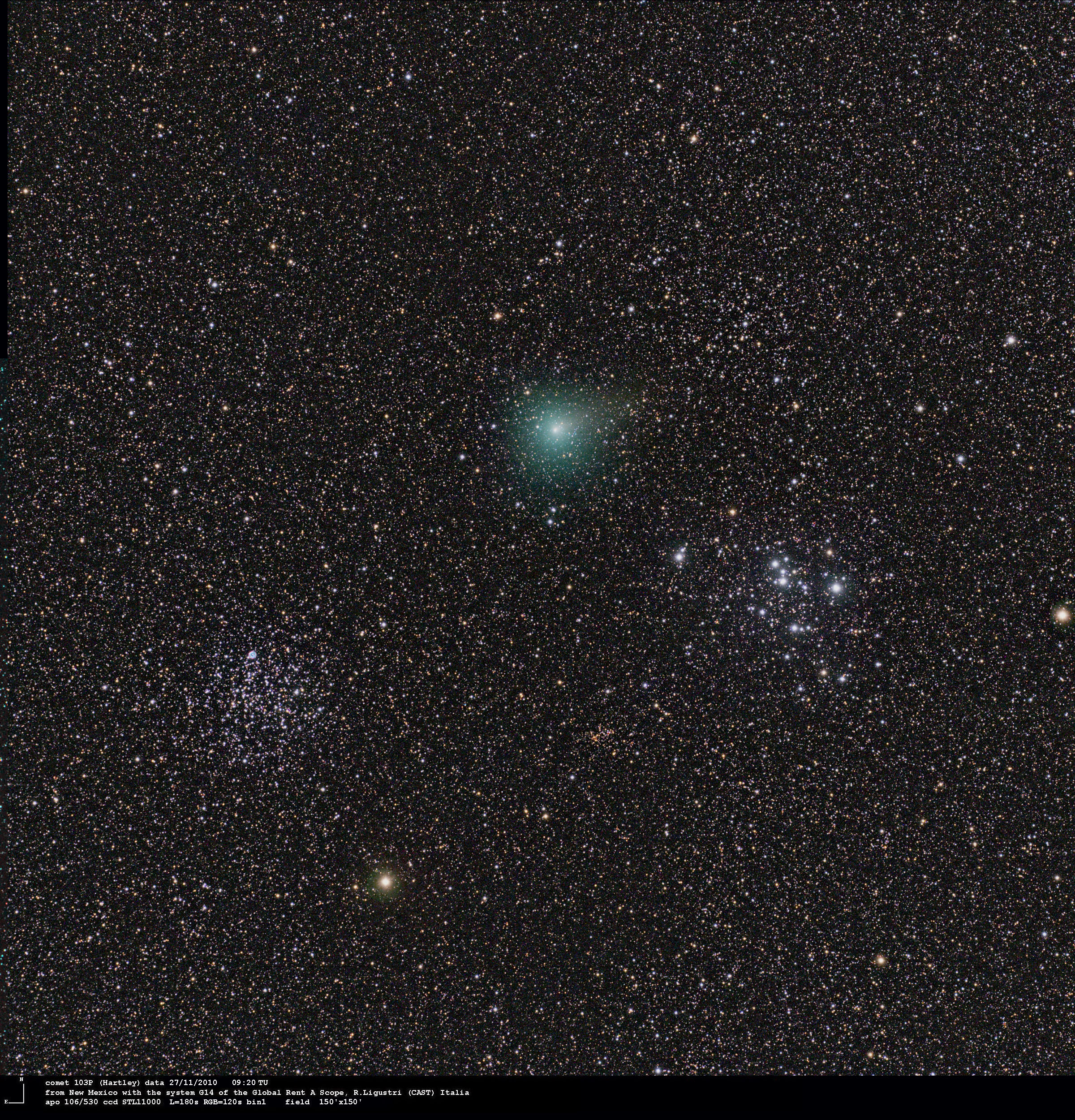
Hartley Comet was fisrt viewed last November and is the fifth comet viewed by a scacecraft from Earth. It has a six year orbital period Herschel space observatory have found that the comet has water with the same ratio of hydrogen in our oceans. The water is contained in the comets thin atmosphere. THe comet came from an icy regoin past Neptune, this leads scientists to believe that a significant portion of Earths water came from the Kuiper Belt. It is interesting to find other planets or comets with simular or the same concentrations of gases and elements. Because water is such a big part of our enviroment, finding more coments or planets with simular water cincentrations may be key to unlocking the constuction of the universe or life simular to that of our planet.
Friday, September 30, 2011
Revised Work Cited
Works Cited
Borchert, Donald M., ed. Encyclopedia of Philosophy. 2nd ed. Detroit: Thomson Gale/Macmillan Reference USA, 2006. Print.
"Pierre Gassendi Biography." Biography Base Home. BiographyBase. Web. 28 Sept. 2011. <http://www.biographybase.com/biography/Gassendi_Pierre.html>.
"Pierre Gassendi Criticism." ENotes - Literature Study Guides, Lesson Plans, and More. ENotes. Web. 28 Sept. 2011. <http://www.enotes.com/pierre-gassendi-criticism/gassendi-pierre>.
"Pierre Gassendi." Wikipedia, the Free Encyclopedia. Wiki Media. Web. 29 Sept. 2011. <http://en.wikipedia.org/wiki/Pierre_Gassendi>.
Schlager, Neil, ed. Science and Its times. 1450-1699 ed. Vol. 3. Detroit, New York, San Francisco: Gale Group, 2000. Print.
Thursday, September 29, 2011
Work Cited
Emily Gaubatz
Mr. Percival
Astronomy
29 September 2011
Works Cited
"Pierre Gassendi Biography." Biography Base Home. BiographyBase. Web. 28 Sept. 2011. <http://www.biographybase.com/biography/Gassendi_Pierre.html>.
"Pierre Gassendi Criticism." ENotes - Literature Study Guides, Lesson Plans, and More. ENotes. Web. 28 Sept. 2011. <http://www.enotes.com/pierre-gassendi-criticism/gassendi-pierre>.
"Pierre Gassendi." Wikipedia, the Free Encyclopedia. Wiki Media. Web. 29 Sept. 2011. <http://en.wikipedia.org/wiki/Pierre_Gassendi>.
Friday, September 23, 2011
Kepler Mission
The Kepler Mission launched march 2009. Its goal was to look for earth sizd planets. The mission was named after kepler because he discovered a lot about planets. The idea of the mission was started in 1980s because of buget cut backs and multiple other reasons it waited till 2009. They find the planets by using a transit method. The transit method observing stars over a period of time and watching for dimming which is caused by a planet moving infront of the star. The Kepler looks at feild of stars near summer triangle the scientists have picked out a hundred thousand stars in the10 degree feild of view. Once a month scientists are able to download the data. The Kepler can find planets as small as the Earth and the same orbit. Problems scientists have to deal with are that some stars dont cause much dimming and that they want to have 10 confirming orbits before saying there is a planet which could be a very long time considering the Earth takes 4 years to complete an orbit. All planets confirmed so far are between 3-5 day orbits. They did this podcast on the day kepler released 706 probable canadites for exo planets. Today there are a possible 406 planets. Kepler is a several year mission, the current estimated length is 3 years. It sends optical wave lengths 400- 865m. Scientists are looking for stars in simular orbits as our sun trying to find where best planet place is either cloer or farther from center of the galaxies. Information from this mission could greatly expand our knowelege of planetary formation and where they form best.
This podcast was extremely interesting. I hope to understand more about other planets outside our solar system. It would be really cool if they found a planet with the same conditions as Earth and we send a satilitte to go take pictures and recording and possibly find another habital planet.
This podcast was extremely interesting. I hope to understand more about other planets outside our solar system. It would be really cool if they found a planet with the same conditions as Earth and we send a satilitte to go take pictures and recording and possibly find another habital planet.
September's Aurora
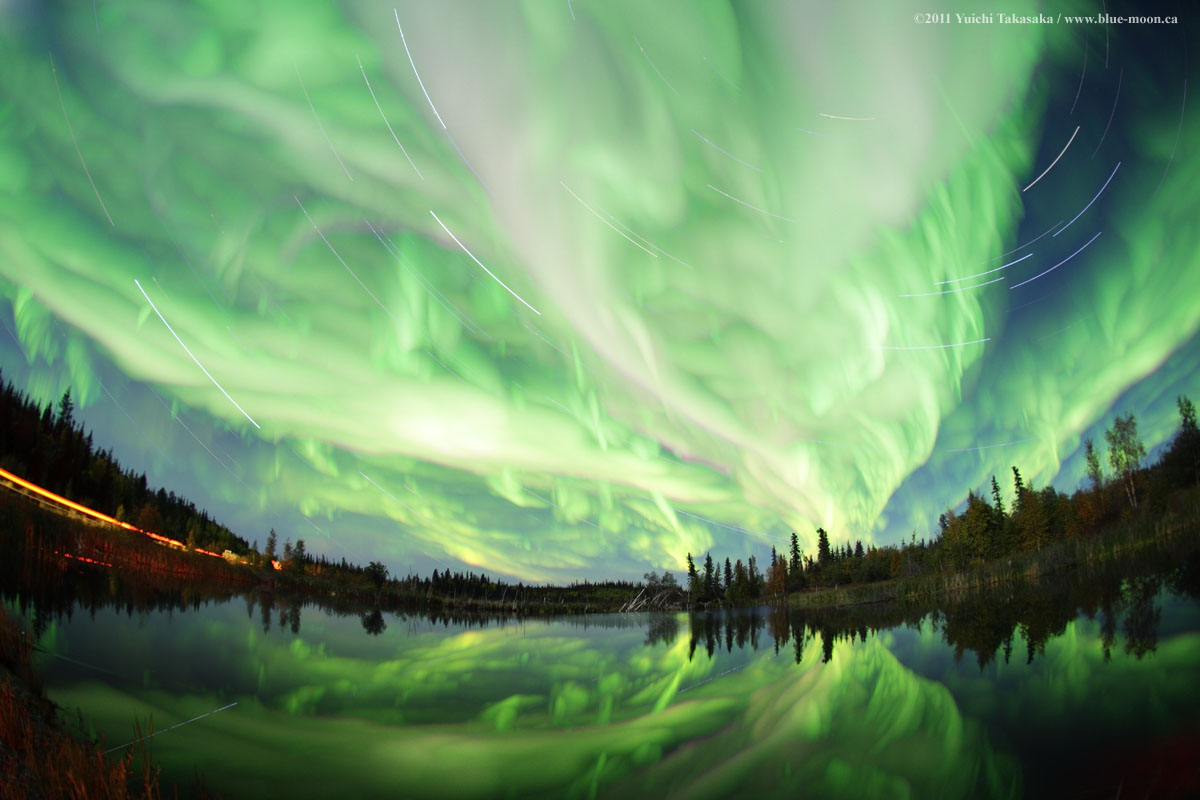
Auroras are most common around equinoxes. They are caused by particles losening up and fallling in our atmosphere lighting up when a CME hits the magnetoshpere. Scientists are puzzled why these geomagnetic storms occur. These bright green colored lights light up the sky and can be seen by space or land. THis shot is ellapsed in time. They are amazing in color and design, one day I hope to be able to go to see an Aurora.
Thursday, September 22, 2011
Podcast: Galileo Galilei
Galileo thought he was going to be a priest early on in life and was urged by his dad to go to medical school. He went into mathmatics instead and studied fine arts and writing. He was then appointed the chair of mathmatics hten moved and taught mathmatic classes. He had 6 brothers that he took care of and had three children out of wedlock with the same women. He was the first to point his telescope up and proved that the Earth went around the Sun and that planets were not perfect spheres. He saw Jupiters moons proving that not everything orbited the Earth. Galileo had a hard life and was ambitious in proving and fixing discoveries made by different scientists as well as making his own discoveries. He proved many times that the Sun was the center of our solar system. By showing all of his discoveries and writing things that mocked people he got into some trouble. He did things against the rules of society which upset the church. He believed that the tides were a result of Earhs motion not from the moon. He ended up under house arrest. He also develped a water clock and came up with the laws of inertia before we new what forces were. He also developed the theory of friction.
I had not realized how hard of a life Galileo faced and how much bad pulicity he had caused. He was very troublesome in his writings as well he mocked a lot of people when he got angry. This podcast was very interesting it gave a lot more inforrmation that what is usually published in textbooks.
I had not realized how hard of a life Galileo faced and how much bad pulicity he had caused. He was very troublesome in his writings as well he mocked a lot of people when he got angry. This podcast was very interesting it gave a lot more inforrmation that what is usually published in textbooks.
Friday, September 16, 2011
Harvest Moon
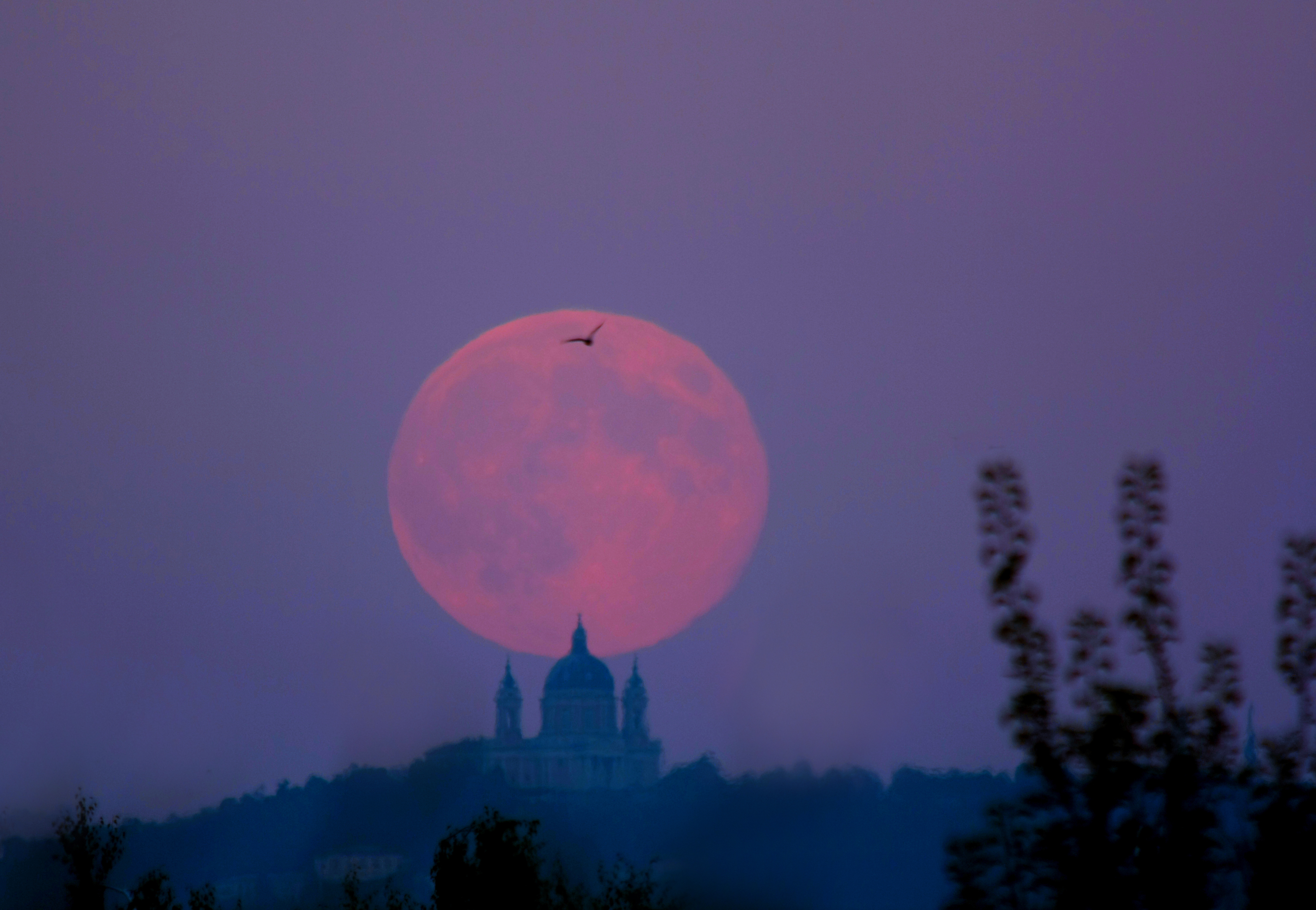
This is September's Harvest Moon. It is the full moon nearest to the autumnal equinox. The moon looks so large due to moon illusion. HArvest moon gets it's name because farmerswould use the moonlight of the full moon to harvest crops late into the night at the end of their growing season. This orange like color is anaffect created by the atmosphere and horizon. As the moon rises, it loses it's color and "appears to shrink due to angles of the moon and our perspective. I love looking at the moon especially during harvest moons so this picture really connected to me.
Friday, September 9, 2011
"In The Shadow of Saturn"
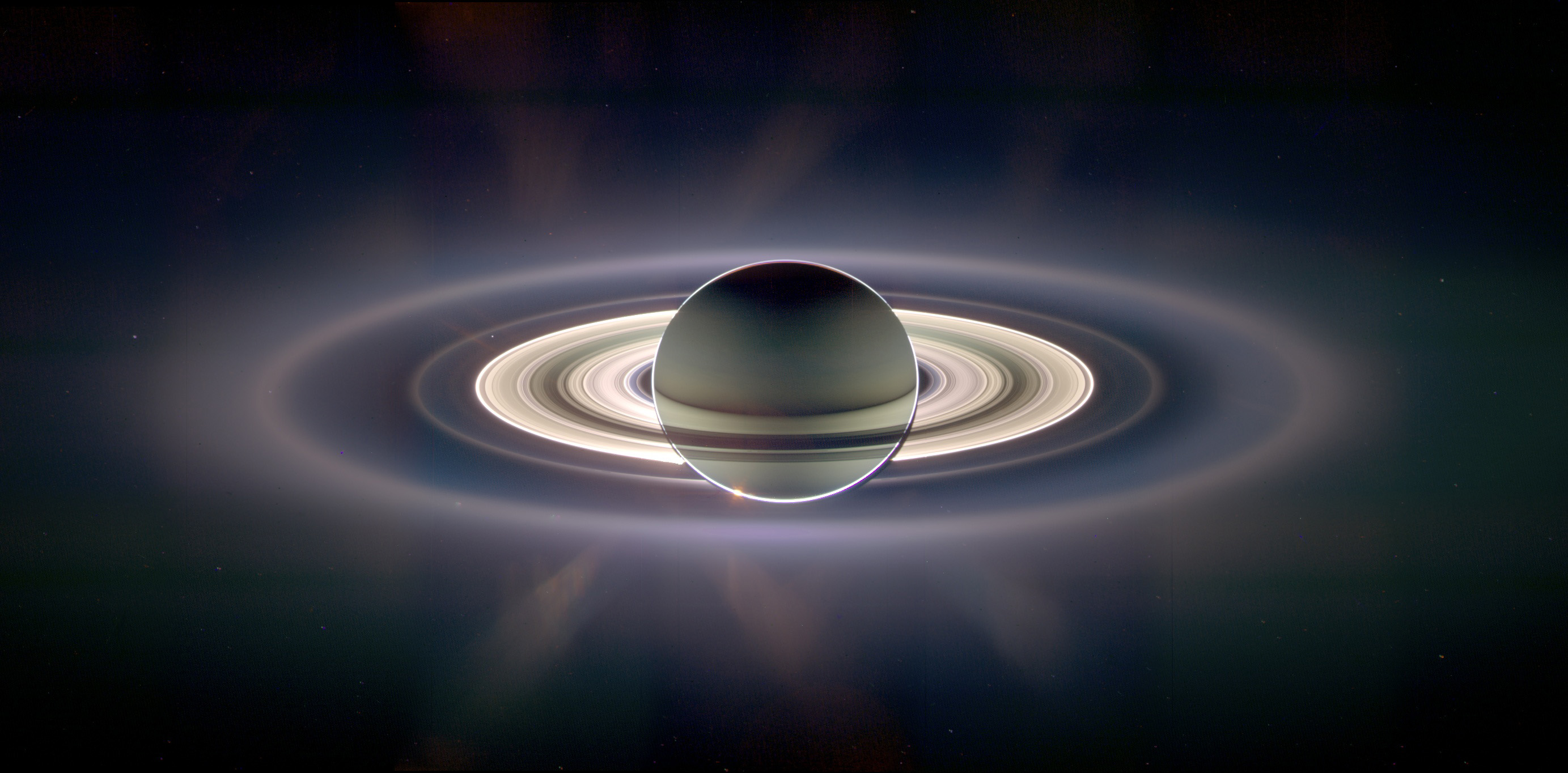
This picture is taken of Saturn when it is infront of the Sun creating an eclipse. The picture was taken by theCassini spacecraft which is a combination of the Cassini orbiter and the Hugens probe, both stocked with many instuments enabling it to take and record complex data. The Cassini craft is missioned to orbit around Saturn for four years collecting data. The probe has given a lot of insight to Saturn showing a new ring. I had no idea how colorful or thin the rings looked on Saturn or that it's rings reflected so much light. Saturn's moon Enceladus shoots off ice fountains, I didnt know that there was ice on Saturn or that its rings were partly created by it's multiple moons. THis picture is remarkable.
Monday, September 5, 2011
APOD Bubble Nebula
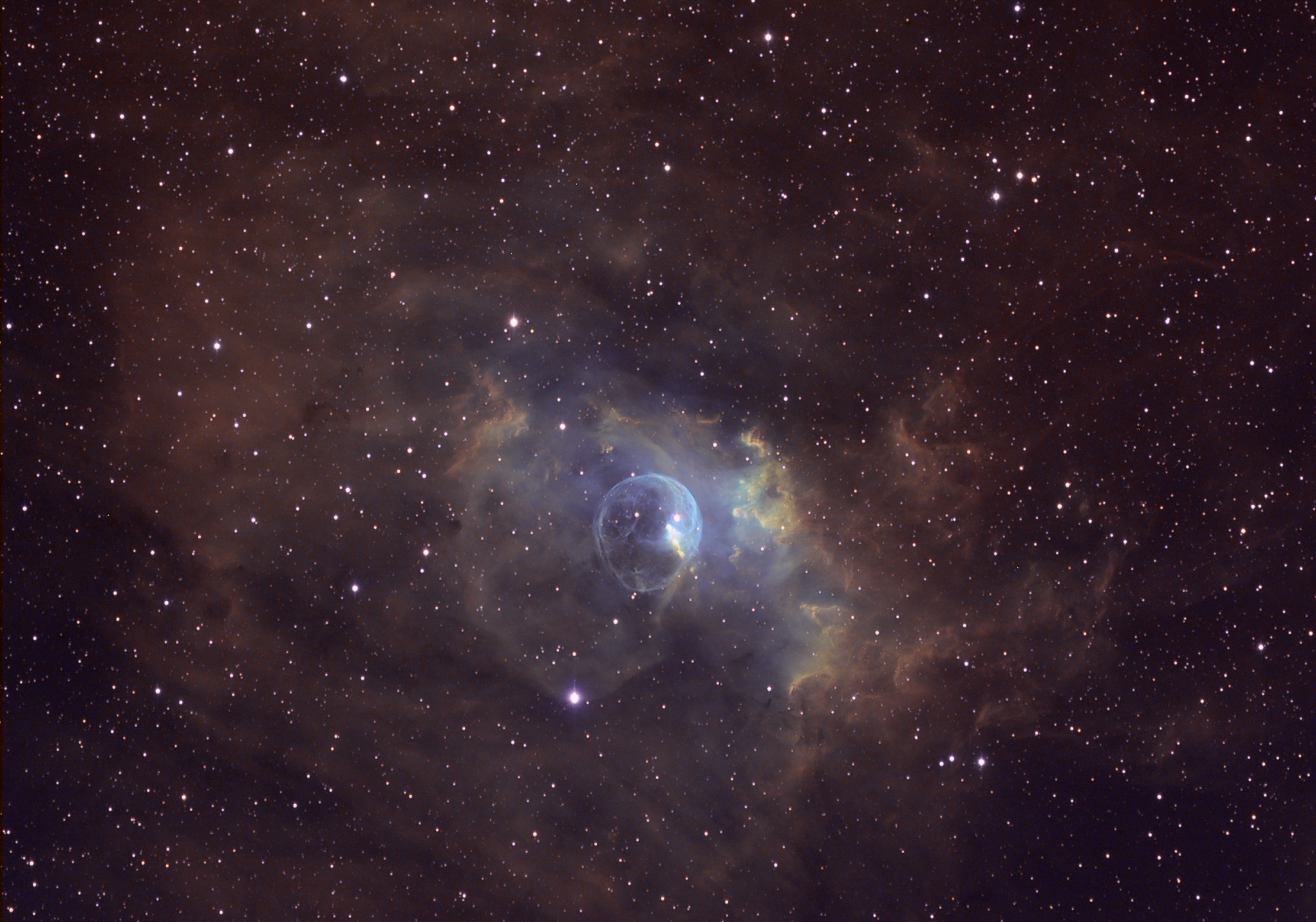
This Bubble Nebula was created from high powered stellar winds around a massive star. The gas around the star is blown into a bubble and ionizes it into a shell. Bubble Nebulas are breath taking. It's pretty cool that stars can blow bubbles too. The bubble is 10 light years across.
Subscribe to:
Posts (Atom)