Friday, September 30, 2011

Revised Work Cited

Works Cited
Borchert, Donald M., ed. Encyclopedia of Philosophy. 2nd ed. Detroit: Thomson Gale/Macmillan Reference USA, 2006. Print.
"Pierre Gassendi Biography." Biography Base Home. BiographyBase. Web. 28 Sept. 2011. <http://www.biographybase.com/biography/Gassendi_Pierre.html>.
"Pierre Gassendi Criticism." ENotes - Literature Study Guides, Lesson Plans, and More. ENotes. Web. 28 Sept. 2011. <http://www.enotes.com/pierre-gassendi-criticism/gassendi-pierre>.
"Pierre Gassendi." Wikipedia, the Free Encyclopedia. Wiki Media. Web. 29 Sept. 2011. <http://en.wikipedia.org/wiki/Pierre_Gassendi>.
Schlager, Neil, ed. Science and Its times. 1450-1699 ed. Vol. 3. Detroit, New York, San Francisco: Gale Group, 2000. Print.

Thursday, September 29, 2011

Work Cited

Emily Gaubatz
Mr. Percival
Astronomy
29 September 2011
Works Cited
"Pierre Gassendi Biography." Biography Base Home. BiographyBase. Web. 28 Sept. 2011. <http://www.biographybase.com/biography/Gassendi_Pierre.html>.
"Pierre Gassendi Criticism." ENotes - Literature Study Guides, Lesson Plans, and More. ENotes. Web. 28 Sept. 2011. <http://www.enotes.com/pierre-gassendi-criticism/gassendi-pierre>.
"Pierre Gassendi." Wikipedia, the Free Encyclopedia. Wiki Media. Web. 29 Sept. 2011.                    <http://en.wikipedia.org/wiki/Pierre_Gassendi>.

Friday, September 23, 2011

Kepler Mission

The Kepler Mission launched march 2009. Its goal was to look for earth sizd planets. The mission was named after kepler because he discovered a lot about planets. The idea of the mission was started in 1980s because of buget cut backs and multiple other reasons it waited till 2009. They find the planets by using a transit method. The transit method observing stars over a period of time and watching for dimming which is caused by a planet moving infront of the star. The Kepler looks at feild of stars near summer triangle the scientists have picked out a hundred thousand stars in the10 degree feild of view. Once a month scientists are able to download the data. The Kepler can find planets as small as the Earth and the same orbit. Problems scientists have to deal with are that some stars dont cause much dimming and that they want to have 10 confirming orbits before saying there is a planet which could be a very long time considering the Earth takes 4 years to complete an orbit. All planets confirmed so far are between 3-5 day orbits. They did this podcast on the day kepler released 706 probable canadites for exo planets. Today there are a possible 406 planets. Kepler is a several year mission, the current estimated length is 3 years. It sends optical wave lengths 400- 865m. Scientists are looking for stars in simular orbits as our sun trying to find where best planet place is either cloer or farther from center of the galaxies. Information from this mission could greatly expand our knowelege of planetary formation and where they form best.

This podcast was extremely interesting. I hope to understand more about other planets outside our solar system. It would be really cool if they found a planet with the same conditions as Earth and we send a satilitte to go take pictures and recording  and possibly find another habital planet.

September's Aurora

See Explanation.  Clicking on the picture will download
the highest resolution version available.
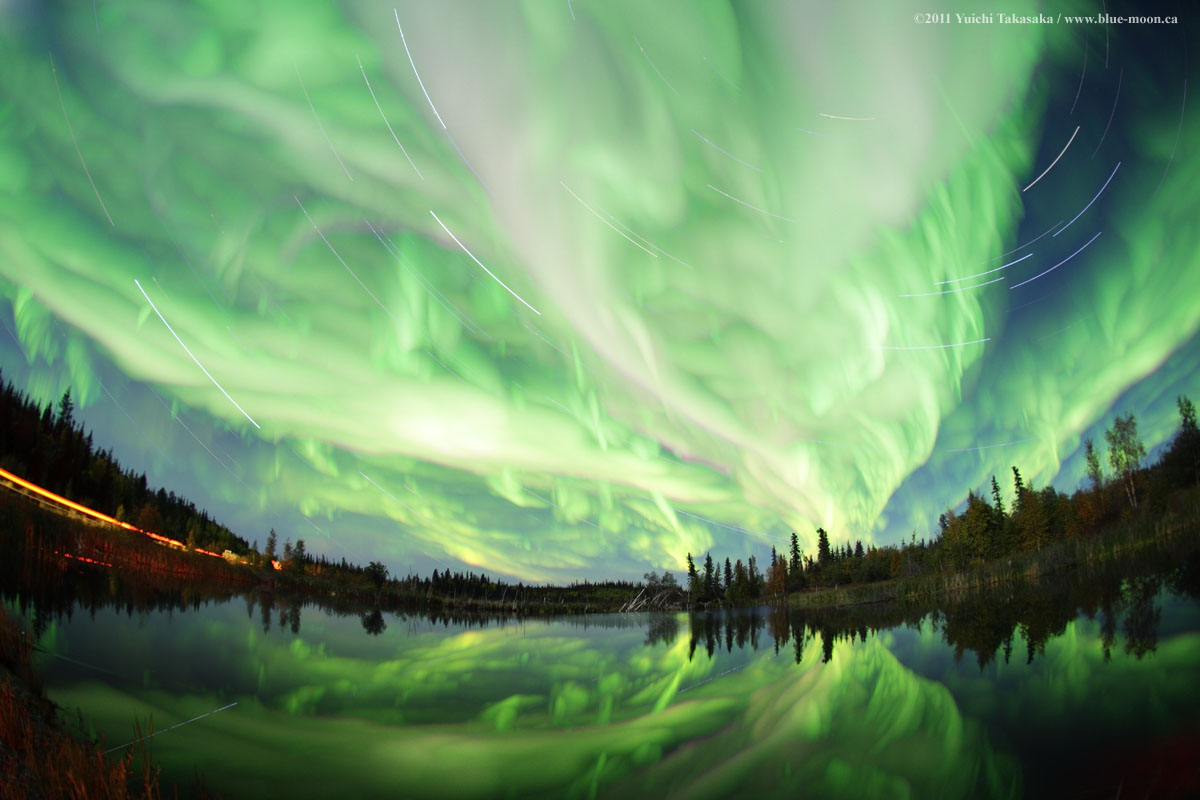
Auroras are most common around equinoxes. They are caused by particles losening up and fallling in our atmosphere lighting up when a CME hits the magnetoshpere. Scientists are puzzled why these geomagnetic storms occur. These bright green colored lights light up the sky and can be seen by space or land. THis shot is ellapsed in time. They are amazing in color and design, one day I hope to be able to go to see an Aurora.

Thursday, September 22, 2011

Podcast: Galileo Galilei

Galileo thought he was going to be a priest early on in life and was urged by his dad to go to medical school. He went into mathmatics instead and studied fine arts and writing. He was then appointed the chair of mathmatics hten moved and taught mathmatic classes. He had 6 brothers that he took care of and had three children out of wedlock with the same women. He was the first to point his telescope up and proved that the Earth went around the Sun and that planets were not perfect spheres. He saw Jupiters moons proving that not everything orbited the Earth. Galileo had a hard life and was ambitious in proving and fixing discoveries made by different scientists as well as making his own discoveries. He proved many times that the Sun was the center of our solar system. By showing all of his discoveries and writing things that mocked people he got into some trouble. He did things against the rules of society which upset the church. He believed that the tides were a result of Earhs motion not from the moon. He ended up under house arrest. He also develped a water clock and came up with the laws of inertia before we new what forces were. He also developed the theory of friction.
I had not realized how hard of a life Galileo faced and how much bad pulicity he had caused. He was very troublesome in his writings as well he mocked a lot of people when he got angry. This podcast was very interesting it gave a lot more inforrmation that what is usually published in textbooks.

Friday, September 16, 2011

Harvest Moon

See Explanation.  Clicking on the picture will download
the highest resolution version available.
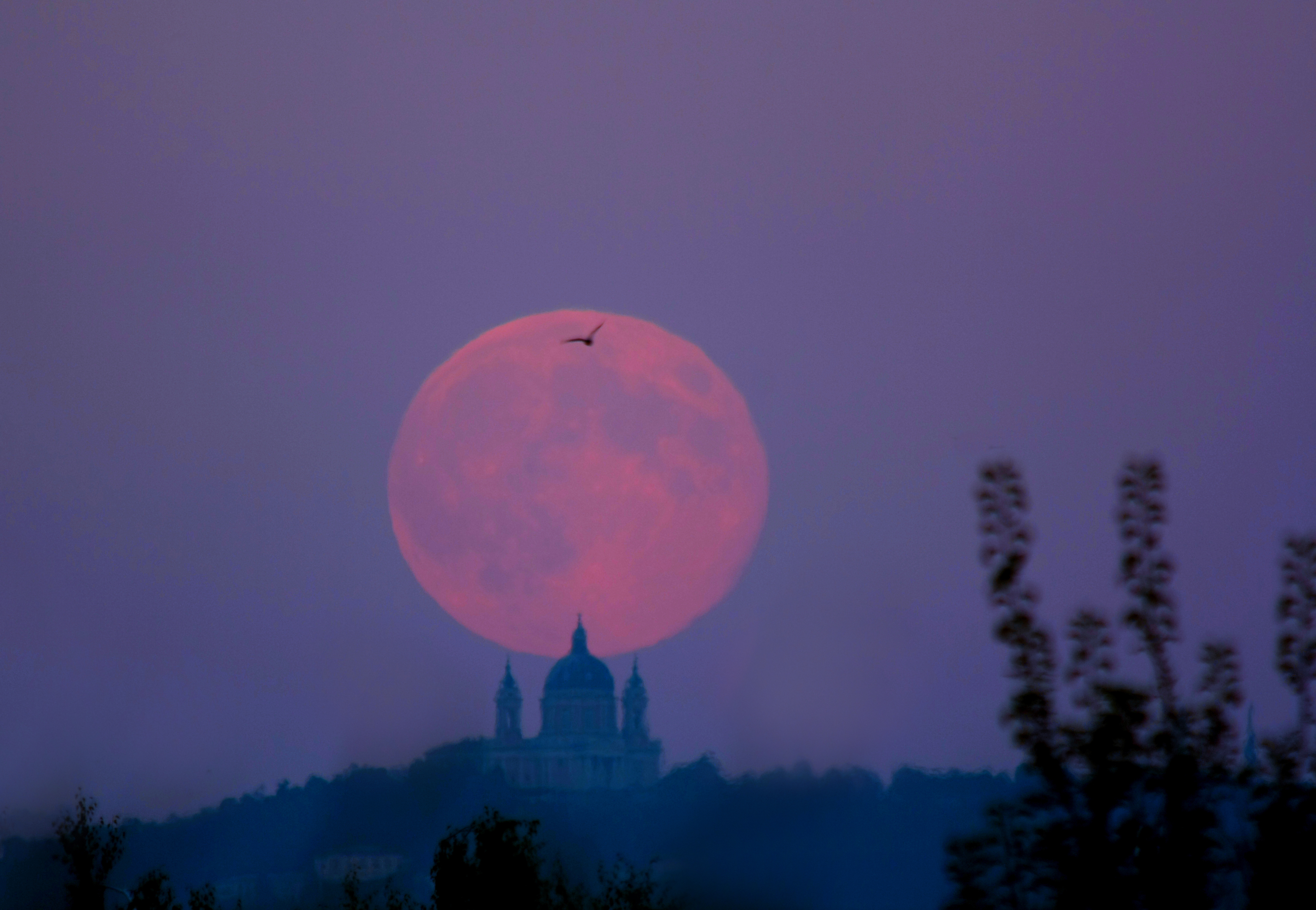
This is September's Harvest Moon. It is the full moon nearest to the autumnal equinox. The moon looks so large due to moon illusion. HArvest moon gets it's name because farmerswould use the moonlight of the full moon to harvest crops late into the night at the end of their growing season. This orange like color is anaffect created by the atmosphere and horizon. As the moon rises, it loses it's color and "appears to shrink due to angles of the moon and our perspective. I love looking at the moon especially during harvest moons so this picture really connected to me.

Friday, September 9, 2011

"In The Shadow of Saturn"

See Explanation.  Clicking on the picture will download
 the highest resolution version available.

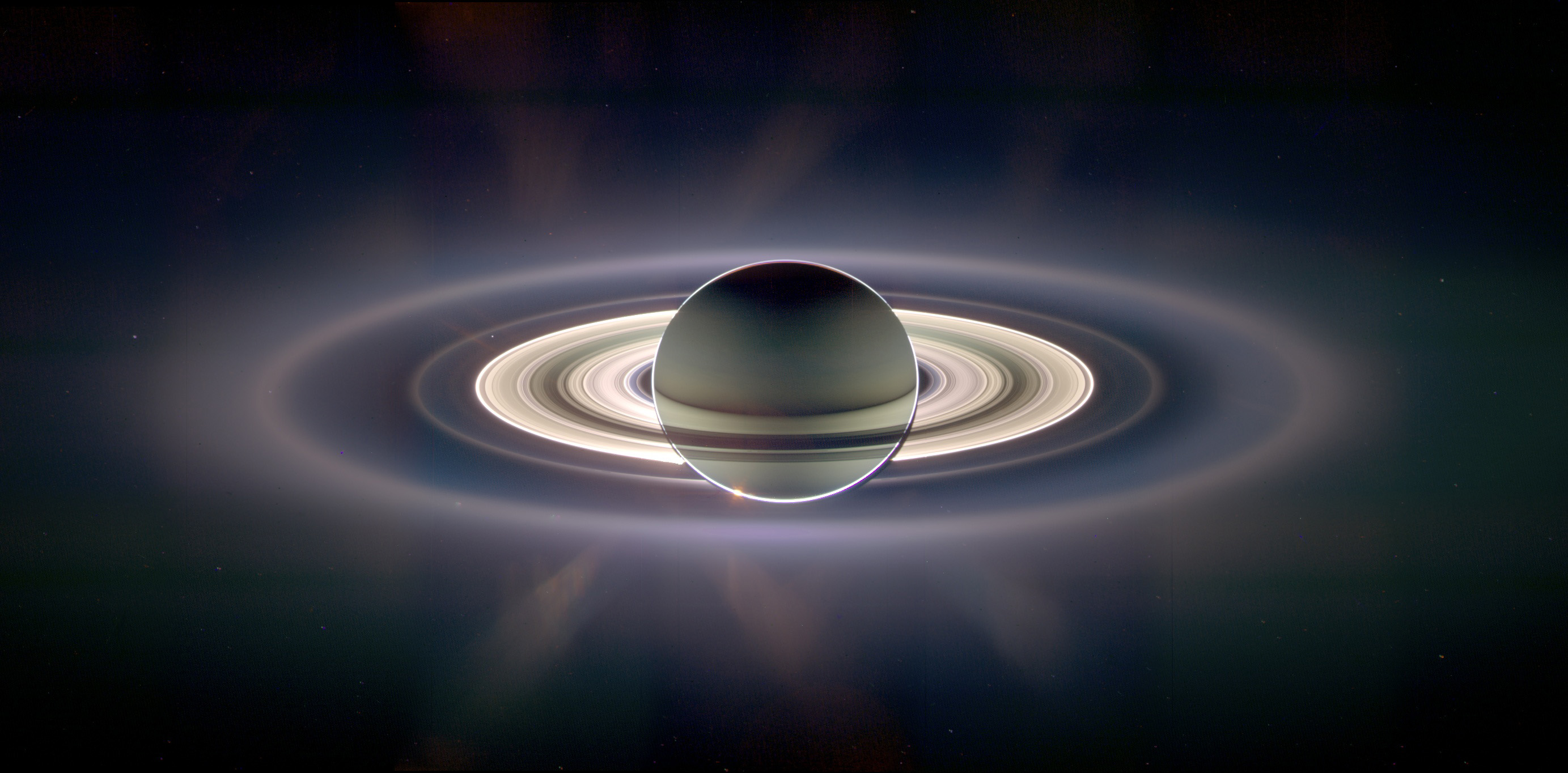
This picture is taken of Saturn when it is infront of the Sun creating an eclipse. The picture was taken by theCassini spacecraft which is a combination of the Cassini orbiter and the Hugens probe, both stocked with many instuments enabling it to take and record complex data. The Cassini craft is missioned to orbit around Saturn for four years collecting data. The probe has given a lot of insight to Saturn showing a new ring. I had no idea how colorful or thin the rings looked on Saturn or that it's rings reflected so much light. Saturn's moon Enceladus shoots off ice fountains, I didnt know that there was ice on Saturn or that its rings were partly created by it's multiple moons. THis picture is remarkable.

Monday, September 5, 2011

APOD Bubble Nebula

See Explanation.  Clicking on the picture will download
 the highest resolution version available.

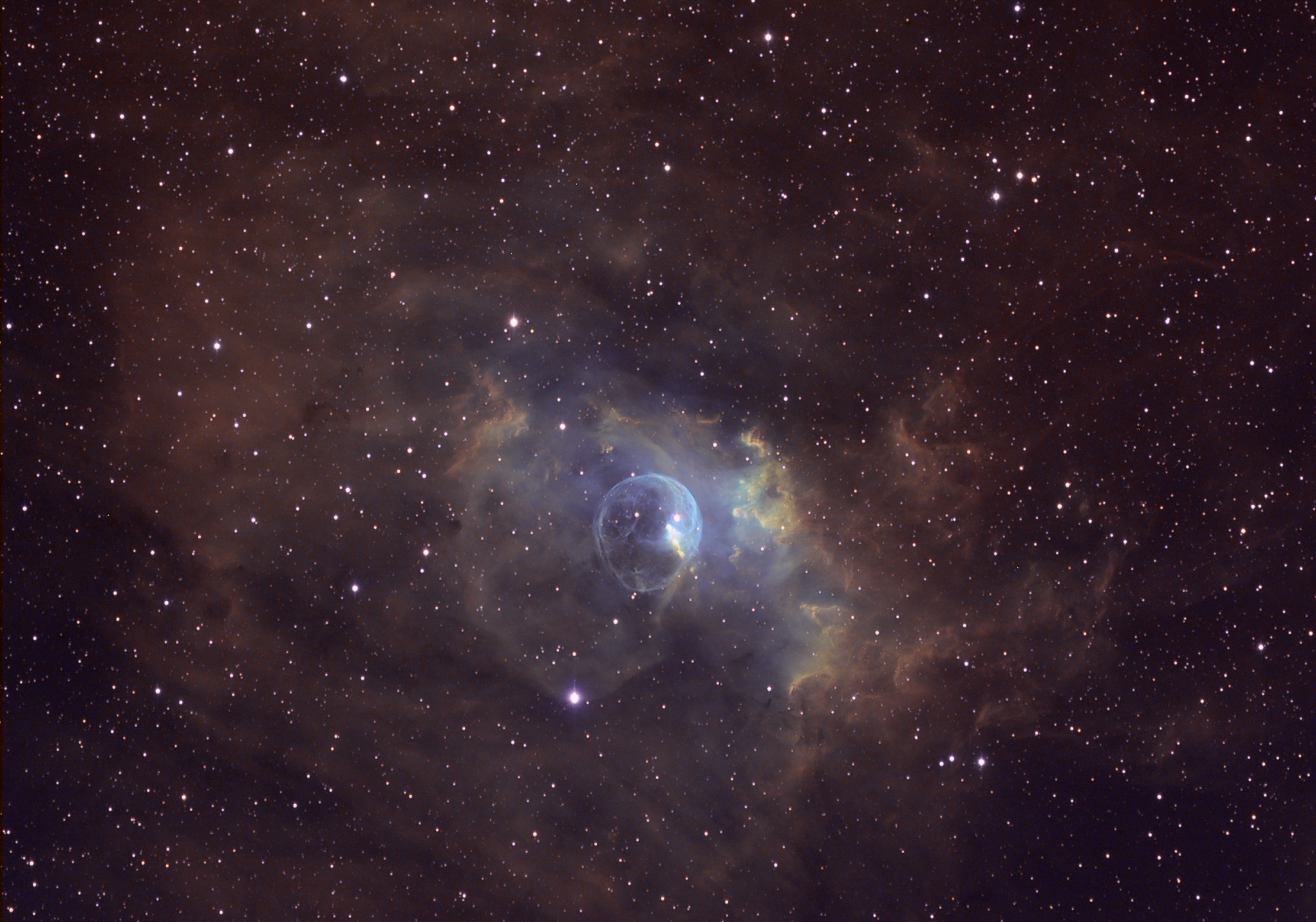
This Bubble Nebula was created from high powered stellar winds around a massive star. The gas around the star is blown into a bubble and ionizes it into a shell. Bubble Nebulas are breath taking. It's pretty cool that stars can blow bubbles too. The bubble is 10 light years across.