Monday, October 24, 2011
Podcast: Galileo Spaceship
The Galileo mission was a plan to have a spacecraft go to Jupiter and actually stay and study the planet, rather than just a fly by. The plan was concieved in the early 1970's. It finally launched in 1989, they used gravitational boost methods to get it to Jupiter. It had many challanges getting it to Jupiter. They even had to change how it transmitted information because its original transmitter broke. They had to wait over a decade before it got to Jupiter 1991 it filmed a astroid and the astroid Ida and it's moon. The scacecraft allowed many scientific discoveries.

Sunday, October 23, 2011
hour of observation 10/22
I was sitting in my back yard looking mainly south and west and north. I had visibility of third magnitude star almost fourth. I was trying to see the meteor shower but I dont think I saw any. The stars were flickering a lot, they seemed more so than normal, is that because the atmosphere? I was trying to find the Northern cross and work from there. I beleive I found it,, I found the summer triangle. I think I saw Scorpius or the Serpent. The moon was a wanning cresent. It was a pretty small sliver. I was observing the sky from 8 to 9. There were only a few low clouds were I was I live in Sarasota. My neighbors had some lights on and I live off Bee Ridge so that couldnt have helped the visibility. I think I successfully pointed out a few contillations to my mom however.
Friday, October 21, 2011
Galaxy on Edge
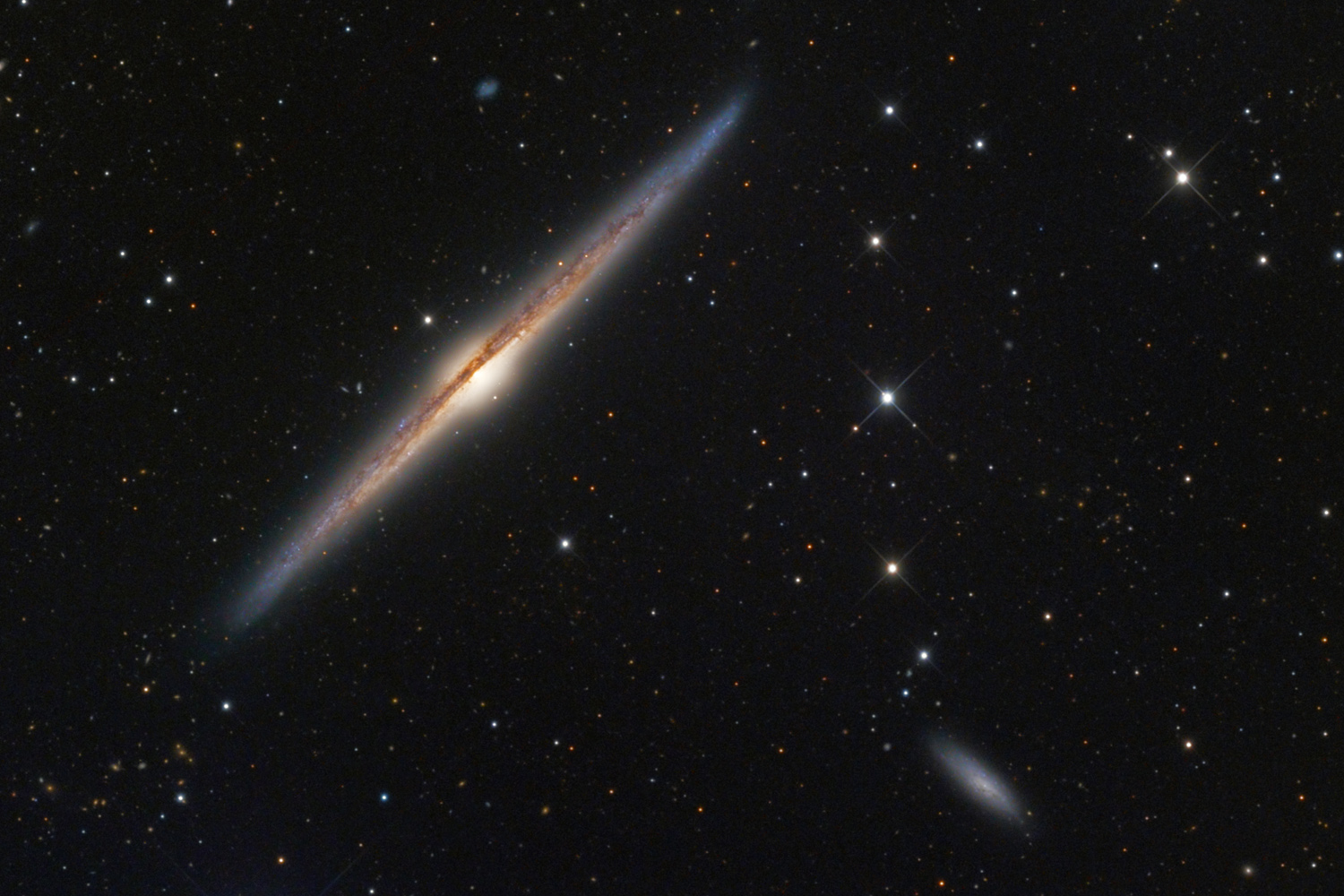
This is the Needle Galaxy, known for its thin shape. It can be found in the constellation Coma Berenices. It has an amazing size of 40 million lightyears and spans 100,000 lightyears. It is amazing haow much technology is advanced letting us view so far into space. One day maybe we will be able to view planets from other galaxies. This picture is truely amazing. It is so cool to be able to see so far past our own galaxy.
APOD 1.8
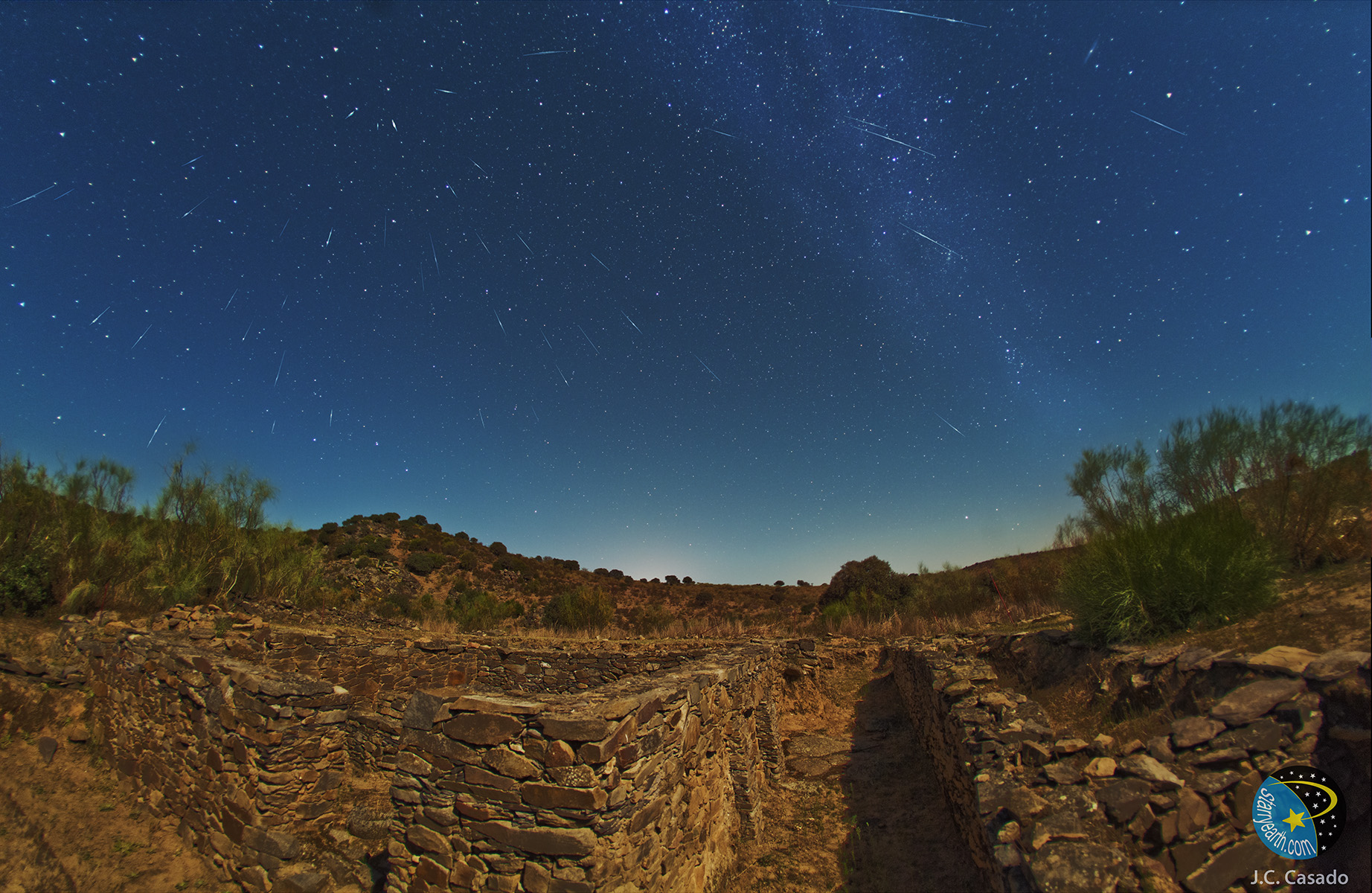
I remember geting woken up by my mom at two in the morning when i was in my early elementry years. She told me to put on a jacket and come outside quickly. My sister and I raced outside to see my dad sitting in a chair looking up. My mom called us over pointing up, she informed us there was a meteor shower. For the next hour we layed staring at the sky watching bright long streeks paint the sky, much like this picture taken in Spain of the Draconid. Tonight there is supposed to be another meteor shower so this picture really stood out to me. It is also interesting to see the costellations labeled since we have been studying them. These meteors were part of 21p/Giacobini-Zinner. Draco is thought to be the radiant of the meteors igniting them causing such a glorious display. This meteor shower happens every year.
Friday, October 14, 2011
APOD 1.7 A Strange Sunrise Over Argentina
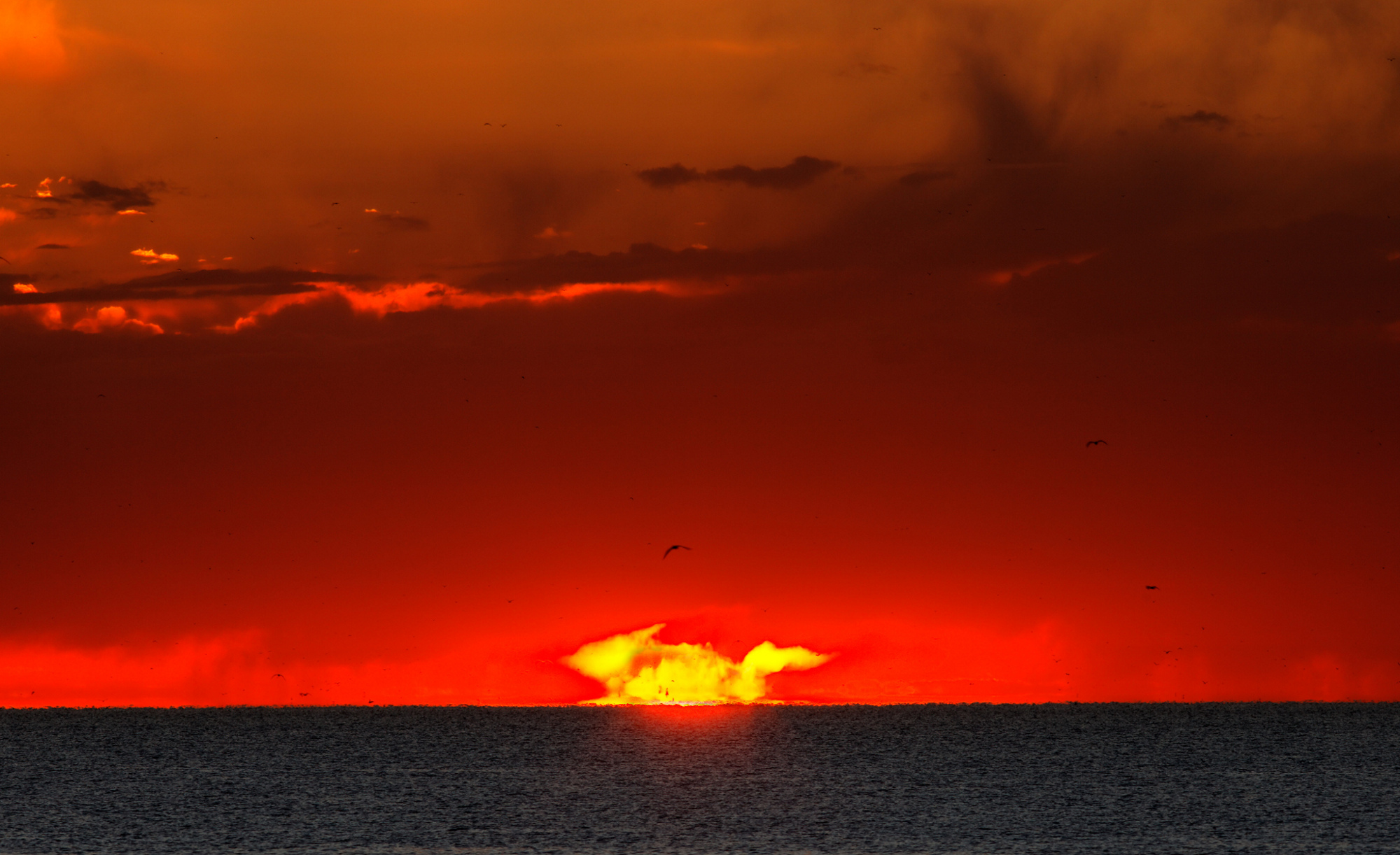
This picture was taken in Buenos Aires Argentina over the river Rio de La Plata. The deformed looking sun is thought to be a result of the deflection of light in the particles of low clouds. If the clouds were thick and low they would scatter the light creating this destorted look, covering the actual sun. The shine on the water creates a Etruscan Vase or Fata Morgana making it look like it is melted. The bright colors are marvelous and contrasted. I love taking pictures and in Florida we have wonderful sunsets, it is cool to see the glory of a sunrise in another place in the world rather than a sunset. After learning about electromagnetic waves it is interesting to apply it to a sunrise and sunset.
APOD 1.7 A Strange Sunrise Over Argentina
Thursday, October 13, 2011
Pierre Gassendi Biography
Emily Gaubatz
Mr. Percival
Astronomy
14 October 2011
Pierre Gassendi
Pierre Gassendi is a French philosopher, mathematician, writer and astronomer. He was born in 1592 in Camptercier, the Provencal area of France. He studied arithmetic, Latin, philosophy and theology. He later taught philosophy, lecturing in contradiction to the Aristotelian doctrines which contradicting the thoughts of most of 17th century society. In 1625 Gassendi was forced to leave his teaching job and moved to Paris where he met Pére Marin Mersenne, peaking his interest in Astronomy.
Although Pierre is most renowned for writing his books in philosophy and political issues, he also made a few large contributions to astronomy. He was the first to observe the transit of Mercury and then Venus using Kepler’s predictions. He also named the northern lights, Aurora Borealis. Another major contribution was the publication of his biographies of Copernicus and Tycho Brahe. Copernicus and Brahe are two of the top astronomers during Pierre’s time, by doing biographies of them both he helped keep their findings solidified in history. A crater on the moon was also names Gassendi. The crater was one of two potential landing spots for Apollo 17.
In 1625 Gassendi met his teacher Pére Marin Mersenne who had introduced him to astronomy. He had made connections to Galileo and Elie Diodati at that time which really stimulated his interest in observational astronomy. This was also the back bone to his philosophical skeptism. Had Mersenne not died so soon in 1637 then perhaps Gassendi would have followed astronomy further.
In the 1640’s Gassendi wrote a series of writing retorting the views of Descartes creating a publishing duel between the two philosophers. He also debated with Jean-Baptiste Morin, who thought that the Earth was the center of the universe. This spurred Gassendi into further examination of Galileo and Copernicus’s work. He then published Insitutio Astronomica in 1647. After this publication Gassendi fell to bad health. For the next few years he mostly spent producing philosophical publications including, Animadversiones in Decimum Librum Diogenes Laertii, one of his most extensive publications. It was in 1653 that Gassendi wrote several biographies of astronomers, including the ones about Tycho Brahe and Copernicus.
Throughout Gassendi’s life he faced many spurts of sickness which gave him the time to publish so many pieces. Gassendi made many contributions in philosophy and astronomy. On October 24, 1655 Gassendi died in Paris.
Friday, October 7, 2011
Night time Observation 9/30/11
I observed the night sky at the beach starting around 9 until 10:30. THe moon was currently a waxing cresent just coming out of a new moon. The moon was extremely thin and had an orange haze as it began to set. The moon starting at a 50 degree angle set by 9:20. THe view of the moon setting into the water was spectacular. there were few clouds. It was hard to view to the south or east due to the lights from condos or the city. I spotted Hercules and the summer triangle and the Scorpion. I tried to find the Archer and the Eagle but I had no luck. The visibility of the stars was pretty good, It was really fun to be able to point at things and know what it could posssibly be or why some stars look more blue or red.
APOD 1.6 Comet Hartley 2
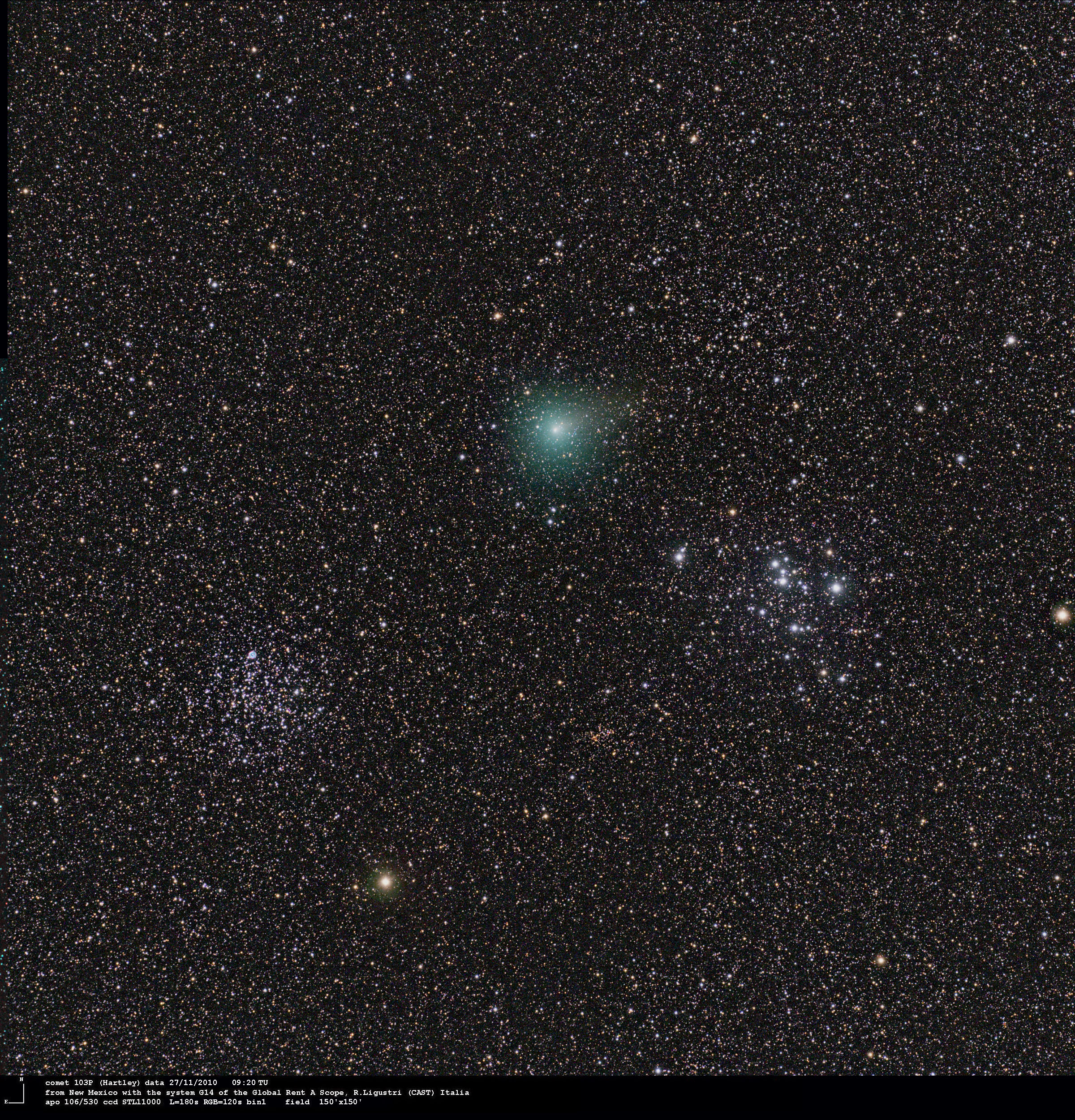
Hartley Comet was fisrt viewed last November and is the fifth comet viewed by a scacecraft from Earth. It has a six year orbital period Herschel space observatory have found that the comet has water with the same ratio of hydrogen in our oceans. The water is contained in the comets thin atmosphere. THe comet came from an icy regoin past Neptune, this leads scientists to believe that a significant portion of Earths water came from the Kuiper Belt. It is interesting to find other planets or comets with simular or the same concentrations of gases and elements. Because water is such a big part of our enviroment, finding more coments or planets with simular water cincentrations may be key to unlocking the constuction of the universe or life simular to that of our planet.
Subscribe to:
Posts (Atom)